ServicesRoof Inspections
Roof Inspections in Meridian Hills
A roof rarely fails all at once. It wears out one nail, one seal and one shingle at a time. We walk your roof, photograph what we find and tell you what needs attention now, what can wait and what is fine.
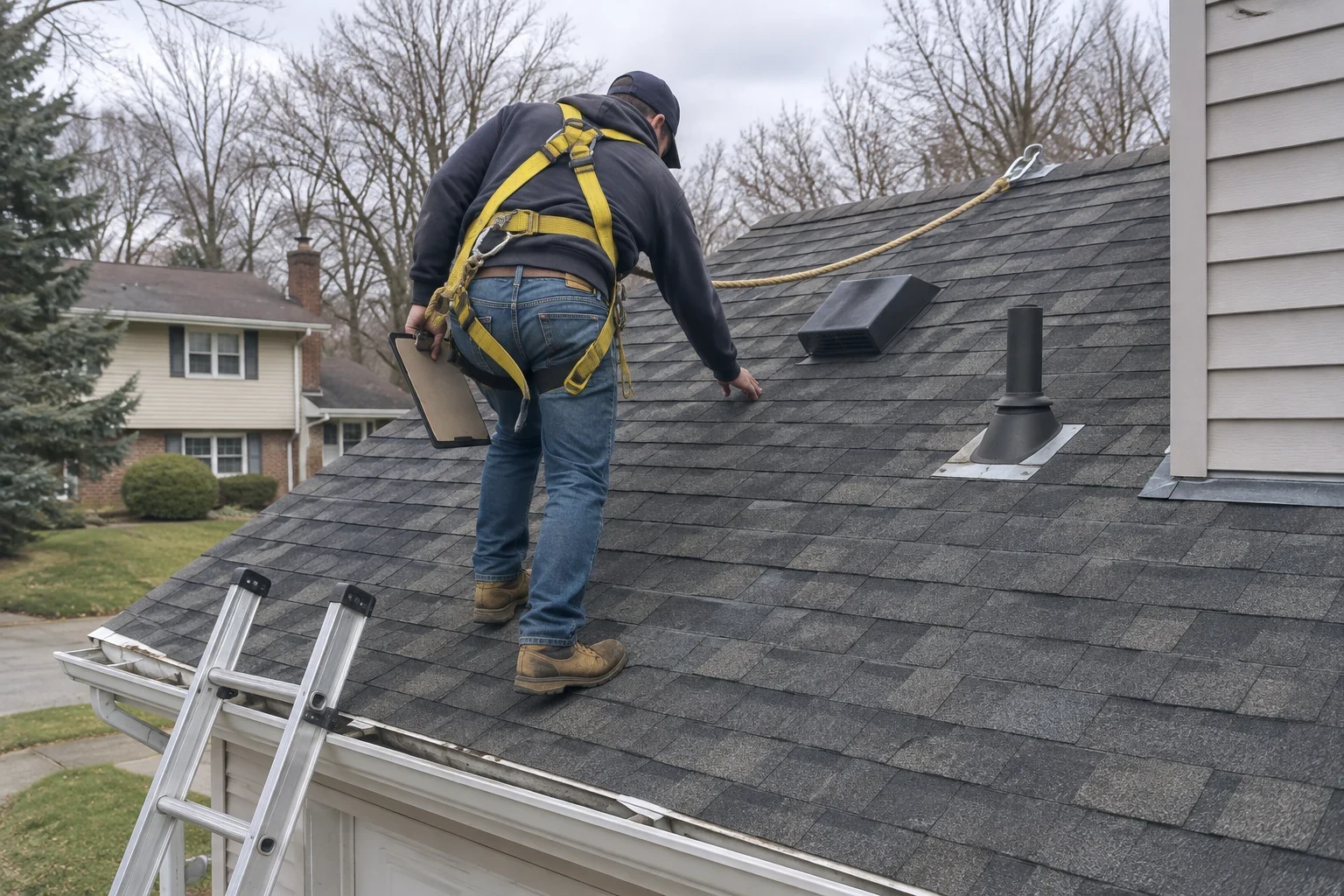
A Close Look Before Small Problems Grow
Most roof trouble starts small. A cracked rubber boot around a vent pipe. A lifted shingle tab. A run of flashing that pulled loose from the chimney. None of it looks like much from the driveway, but water finds those spots and works into the decking underneath.
Our approach is simple. We would rather help you keep the roof you have for as many years as it can give than sell you a new one early. An inspection is how that starts. Central Indiana winters are hard on roofs, with freeze and thaw cycles that open up small gaps a little more every year. Catching those gaps early is what keeps a fix small.
You get a plain answer. If the roof is in good shape, we say so. If it needs roof repair, we show you where and why. If it is near the end of its life, we explain how much time it likely has left so you can plan.
What the Inspection Covers
- Shingle condition
- Cracks, curling, blisters, missing tabs and bald patches where the granules have washed off all get noted. How much grit is gone tells us how quickly the surface is aging.
- Flashing around chimneys and walls
- Leaks most often start where the roof meets something else, like a chimney, a wall, a skylight or a valley. We make sure the metal sits tight and the sealant is still whole, not dried and split.
- Pipe boots and roof vents
- The rubber collars on plumbing vents turn brittle after years of summer heat and winter cold. Each one gets checked, along with the box vents and ridge vent.
- Gutters and the roof edge
- Gutters should drain, slope toward the downspouts and hold firm to the fascia. When water sits at the edge, the wood behind it starts to rot.
- The attic and roof deck
- If you are fine with it, we also climb into the attic. Daylight between boards, dark stains, damp insulation and musty air each point to a problem. Spongy areas we notice underfoot up top get written down.
- Pictures and a short report
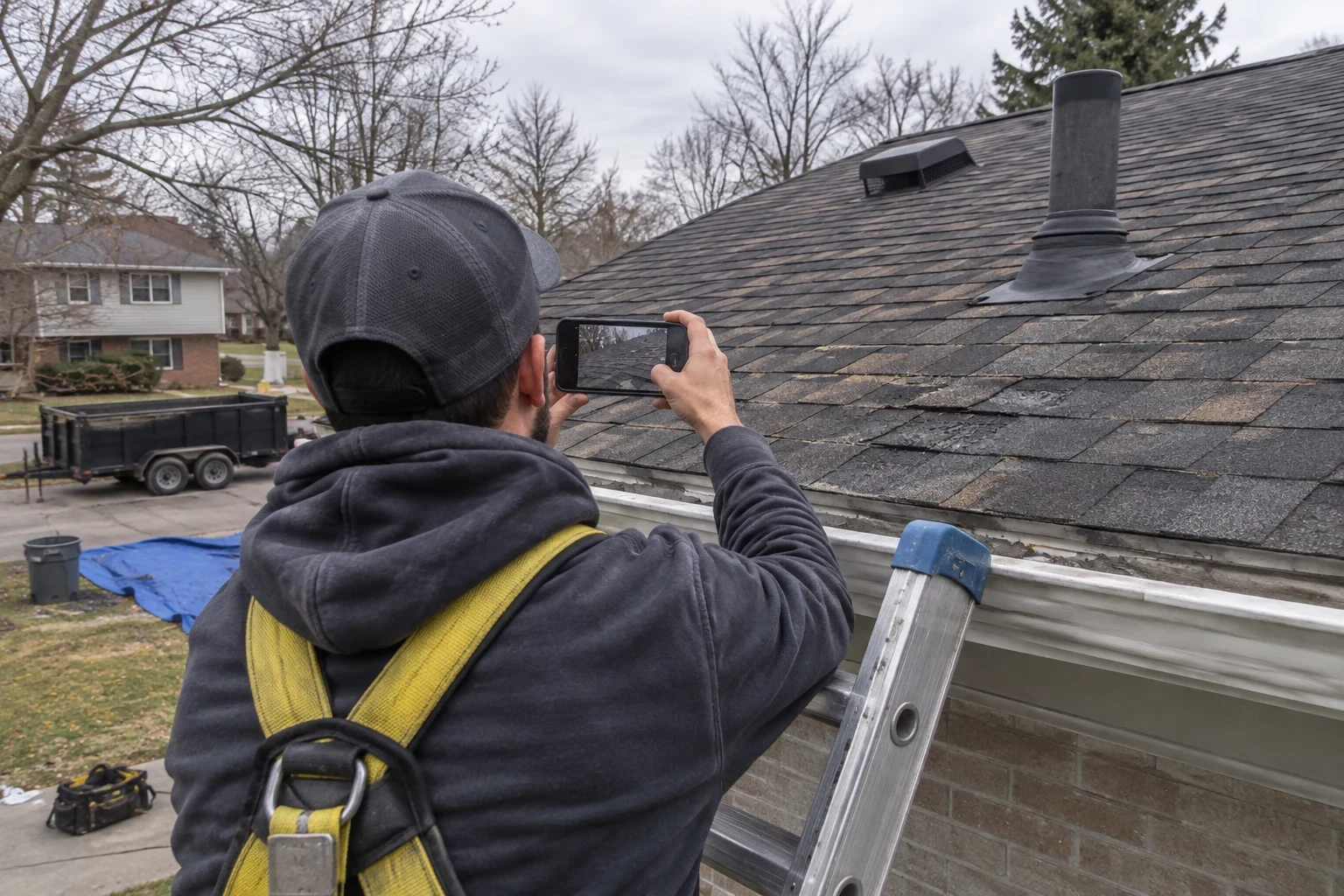
- We hand over photos and a brief summary sorted into three groups: fix now, fix soon and keep an eye on.
When to Have Your Roof Looked At
A stain on the ceiling
A brown ring on drywall means water made it inside. The leak on the roof is often not right above the spot, because water runs along rafters before it drips.
Granules piling up in gutters
A little grit is normal on any roof. A thick layer means the shingles are losing their protective coating.
A recent hail or wind storm
Hail dents rarely show from the yard. A check soon after a storm can stop a leak before it starts and gives you records if you file a claim.
Ice dams every winter
A heavy ice ridge along the eaves usually means heat is escaping from the attic. Melt water trapped behind it can push back under the shingles.
A roof past 15 years
Older roofs deserve more attention. Checking every year or two lets you budget for a replacement instead of getting caught off guard.
A home sale or purchase
Knowing the real condition of the roof before closing keeps buyers and sellers on the same page.
What Moves the Price of Any Work We Find
There is no charge for the inspection itself. When it turns up something that needs fixing, the price of that work depends on a handful of things. You get it in writing with each item listed on its own line, so you can choose what to fix now and what to put off.
Condition under the surface
Resealing a loose piece of flashing is quick. If the plywood under it has gone soft, that means new decking and more hours. Nobody can see that for certain until the old layer comes off, and we say so up front.
Roof size and pitch
A steep pitch or a second-story roof means harnesses, roof jacks and slower footing. More square footage simply means more material.
Type of roof
Shingle, metal and flat TPO roofs each call for their own parts and methods. On an older shingle roof, finding a close color match can take extra legwork.
Fix it or start over
Most of what we find is a repair. When wear runs across the whole roof, roof replacement can be the better use of your money, and financing is an option on bigger jobs.
What Happens on Inspection Day
- 1
A quick call to pick a day
On the phone we ask how old the roof is and whether you have seen leaks, stains or loose shingles. Then we find a time that fits your week.
- 2
A lap around the house first
Before the ladder goes up, we circle your home and check the rooflines, gutters, downspouts and fascia. Dips and sags are easiest to spot from the yard.
- 3
Up on the roof
When the roof is safe to stand on, we cover every slope, each vent and pipe, and all the flashing. Photos get taken the whole way.
- 4
Into the attic, with your OK
A short look from inside shows us leaks, airflow problems and how the decking is holding up.
- 5
Going over it together
Before we head out, we flip through the photos with you and explain each issue in plain terms. What happens next is your call, and we will not lean on you.
Common Questions About Roof Inspections
Do you charge anything for the inspection?
No. Coming out, going over the roof and explaining what we found costs you nothing. You do not owe us any work after the visit.
Is this just a way to sell me a new roof?
It is not. Most roofs we check need a small repair or nothing yet. When a roof still has good years in it, we tell you that and suggest when to have it looked at again.
How much of my day will this take?
Plan on roughly an hour for a typical house. A bigger roof, lots of angles or a trip into the attic can stretch that a bit.
Do I need to be home?
Not for the outside part. We can do that while you are at work. It is better if you are around at the end so we can go through the photos face to face, and someone has to let us in if you want the attic checked.
How often should a roof get checked?
Once every year or two works well for most homes, plus after a strong hail or wind storm. Spring is a smart time because it shows what the winter left behind.
What happens if you find storm damage?
We record it with photos and written notes. We work with homeowners and insurance companies on storm damage claims and can walk you through how a claim usually goes. Coverage is still the adjuster's decision.
Know Where Your Roof Stands
A short visit now can save you a bigger repair down the road. We serve Meridian Hills and nearby towns like Carmel, Indianapolis and Zionsville.