ServicesRoof Repair
Roof Repair in Meridian Hills
A leak or a few loose shingles rarely means you need a new roof. We find the real cause, fix it properly and show you photos of what we found. Small repairs done on time keep the rest of the roof on your home in service for years.
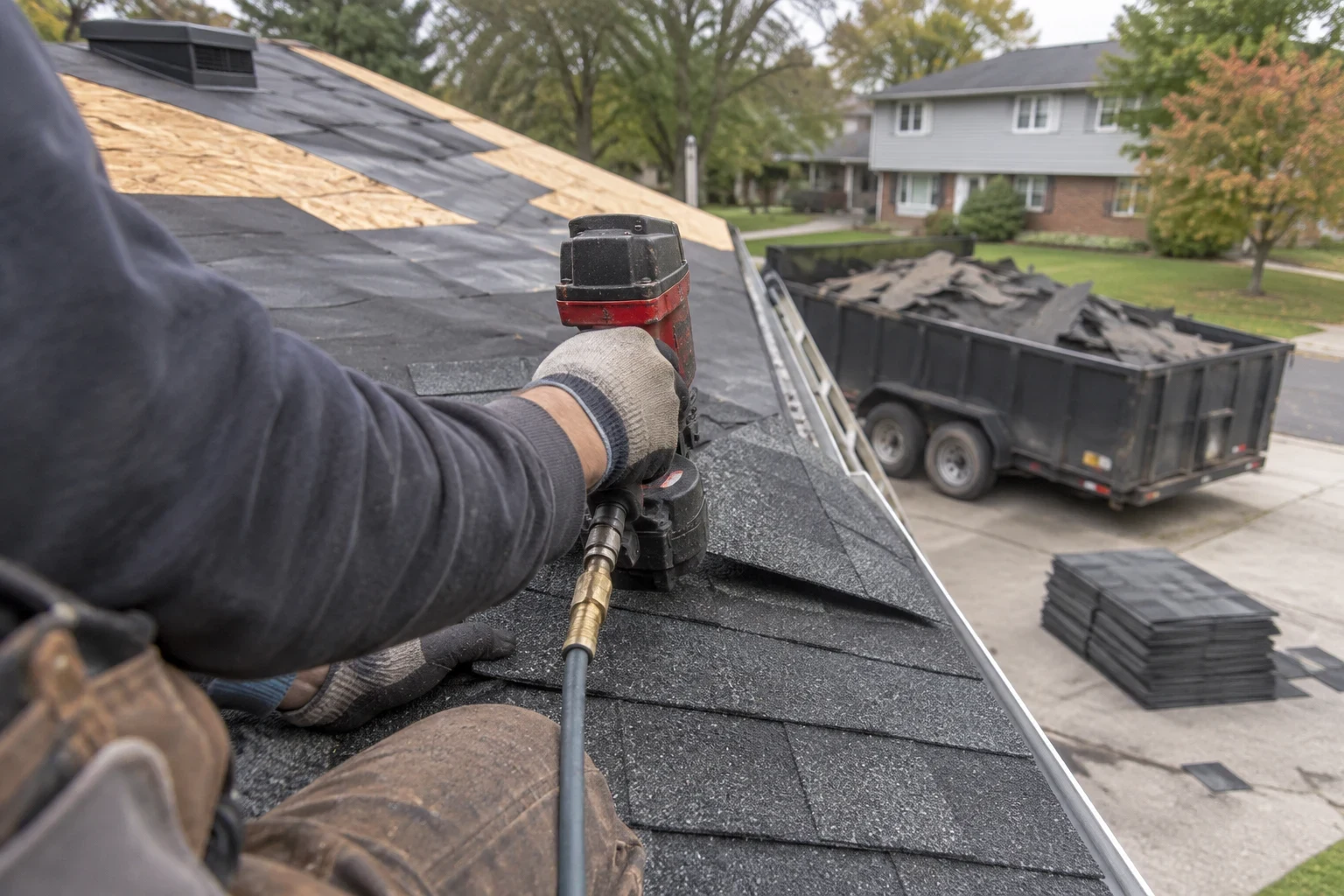
Fix it early and the roof lasts longer
Most roofs don't fail all at once. A few shingles lift. A rubber seal around a vent pipe cracks. Flashing pulls away from the chimney. Catch those early and the rest of the roof keeps doing its job. That is what our roof repair work is for.
We start by finding where the water actually gets in. It is often not right above the stain on your ceiling. Water runs along the decking and rafters before it drips, sometimes several feet. We trace it back, fix the source and check the area around it, so you are not dealing with the same spot next spring.
Some roofs are just worn out. If yours is one of them, you'll hear it from us. Sometimes a repair is money well spent. Sometimes it isn't, and roof replacement is the better call. You get a straight answer either way.
What a repair covers
- Leak tracing
- We look from the attic and from the roof. We check the decking, the nail lines and the stains on the wood to follow the water to where it starts.
- Shingle replacement
- Cracked, curled or wind-lifted shingles come out and new ones go in. We match color and style as close as we can and reseal nearby tabs that have let go.
- Flashing and pipe boots
- Chimneys, walls, skylights and vent pipes are where most leaks start. We reseal or replace bent flashing and swap out rubber pipe boots that have dried and split in the sun.
- Valleys and eaves
- Freeze-thaw winters push ice under the shingles at the eaves and in valleys. We repair those areas and add ice and water underlayment where it is missing.
- Soft decking
- If the plywood under a leak has gone soft, patching over it won't hold. We cut out the bad section and put in new decking before the shingles go back on.
Signs your roof needs a repair
Stains on a ceiling or wall
Brown rings or bubbling paint mean water is getting in somewhere. Even if it is dry now, it will come back with the next hard rain.
Missing or lifted shingles
After a windy day, look for shingles in the yard or tabs sticking up. Each gap lets water reach the underlayment.
Granules in the gutters
Shingles shed their gritty coating as they wear. A little is normal. Piles of it at the downspouts mean the shingles are losing their protection from the sun.
Damp insulation or daylight in the attic
Wet spots on the insulation or light coming through the boards point to a problem you can't see from the ground.
Ice dams in winter
Thick ice along the gutters can force meltwater back under the shingles. It often shows up as a leak near an outside wall.
What sets the price of a roof repair
Every repair is different, so we price yours after we've been up there and seen it. The part nobody can see from the ground is what's under the shingles. Your written estimate breaks out each item so you know where the money goes. Financing is available if it helps.
How much is damaged
Swapping out a few shingles is a quick job. A leak that has run for months can leave wet decking and a bigger section to open up.
Roof pitch and reach
Steep slopes and tight corners call for harnesses, more setup and careful footing. A low roof with clear access goes faster.
Where the problem is
Work around a chimney or skylight takes more time and care than a spot out in the open field of the roof.
Matching materials
Most shingle lines in use today are still on supplier shelves. If yours has been discontinued or is an older style, finding a close match can take some extra legwork.
Decking condition
Rotted plywood gets cut out and replaced. We can't be sure until the shingles are off, and we'll show you the bad wood before it goes on your bill.
How a repair job goes
- 1
Free inspection
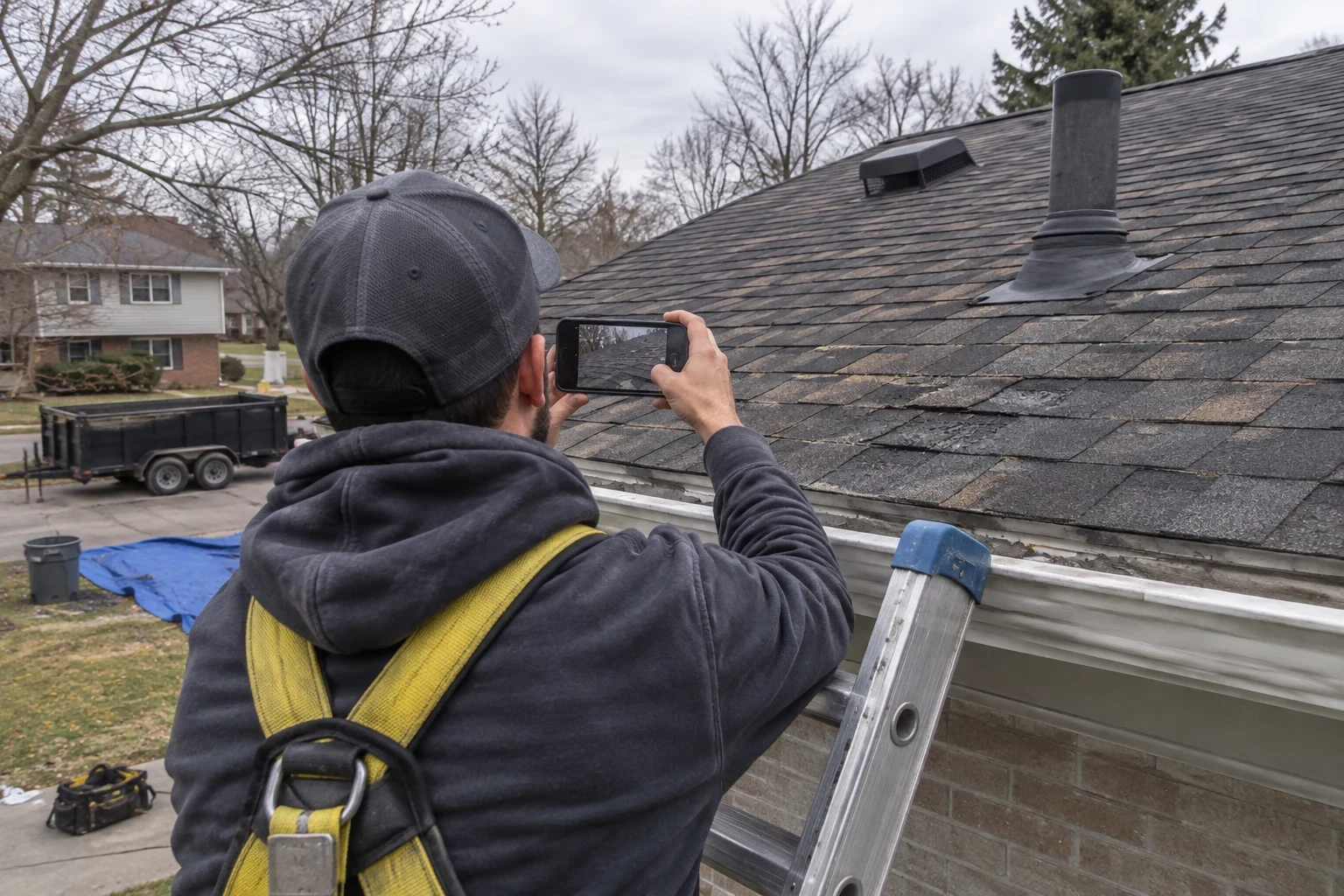
We come out, check the roof and the attic, and take photos of anything that needs work. It costs you nothing.
- 2
A clear estimate
We go over the pictures with you. Then you get a written estimate with every line spelled out. If a repair won't pay off, we say so plainly.
- 3
Repair day
Most repairs take a few hours. We cover plants and the ground below, keep the work area small and close up the roof before we leave.
- 4
Cleanup and a final look
Torn-off shingles and scrap go in the trailer, not your yard. We sweep the lawn and driveway with a magnetic roller to catch stray nails, then walk you through what we fixed.
Roof repair questions
Can you match my existing shingles?
Usually yes, or very close. Shingles fade over time, so even the same product can look a shade different at first. We pick the best match we can find and show you before we start. If your style is discontinued, we'll talk through the options.
How do I know if I should repair or replace?
It comes down to the age and condition of the whole roof. If the damage is in one area and the rest is sound, a repair makes sense. If the shingles are brittle and shedding granules all over, a patch only holds things off for a season or two. We'll explain what we found on your roof and our reasons, and our Roof Replacement page covers that side of things.
Will a small leak really get worse?
Yes. Water soaks into the decking and insulation a little at a time, and wet wood rots. Winter makes it worse when trapped water freezes and opens the gap wider. A small fix now usually costs far less than the damage it heads off.
Can my insurance pay for the repair?
If wind or hail caused the damage, it may be covered. We work with homeowners and insurance companies on storm damage claims, and we can document what we find with photos. See our Storm Damage Repair page for more on how that works.
Do you do repairs in winter?
Many repairs can be done in cold weather. Shingles get stiff and sealant needs some warmth to bond, so we plan around the weather and may come back to finish sealing on a warmer day. We'll tell you up front if your repair should wait for better conditions.
Small fixes now, fewer big ones later
Tell us what you're seeing and we'll pick a time to come look. Before anyone picks up a hammer, you'll have photos of the problem, an honest take on it and an itemized estimate in writing.