ServicesTPO Roofing
TPO Roofing in Meridian Hills
Shingles can't keep water out on a flat porch or garage roof. TPO can. We install a white, heat-welded membrane over the low-slope parts of your home, set it up to drain, and show you how to keep it in good shape for years.
What TPO is and when it fits
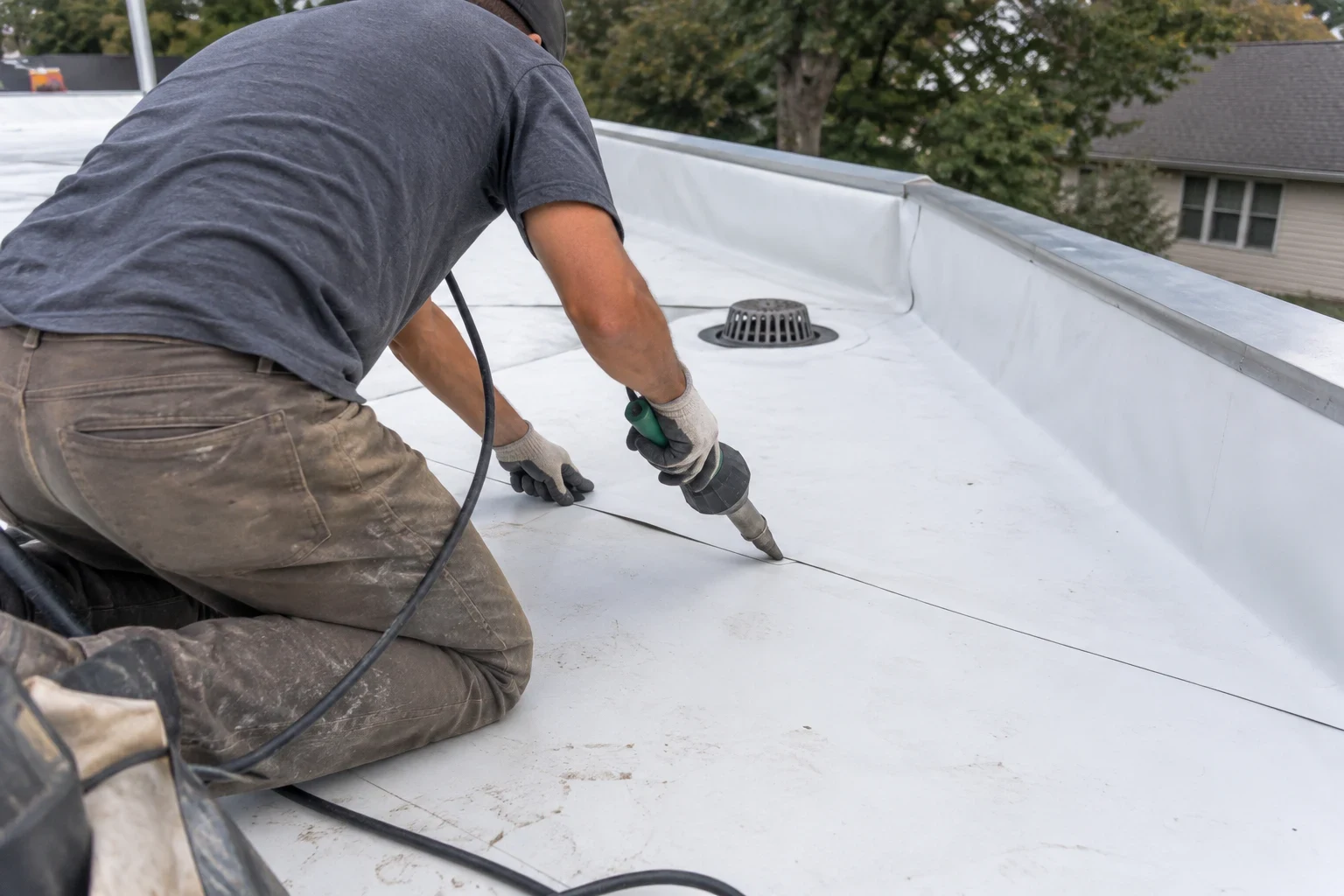
TPO is a single-ply roofing membrane made from thermoplastic polyolefin. It comes in wide rolls. We lay it flat, fasten or glue it down, and melt the seams together with a hot-air welder. Once welded, the seams become one piece of material, so water has no lap to sneak under.
It is the right call for roof sections with little or no pitch. Think of the flat top over an attached garage, a sunroom, a back porch or a later addition. Shingles on those spots tend to leak because water moves too slowly and backs up under the tabs.
Our focus is making the roof you have last. Sometimes that means a full TPO install. Sometimes a seam repair or new flashing is enough, and we will tell you that plainly.
What a TPO job includes
Tear-off and deck check
We remove the old rolled roofing, tar or membrane down to the wood. Then we walk the deck and replace any soft or rotted sheets before anything new goes on.
Insulation and tapered board
Rigid insulation goes down next. Where water has been sitting, we use tapered boards to build in a slight slope toward the edge or drain.
Welded seams, probed by hand
Every seam is heat-welded, then checked along its full length with a probe. Any gap gets rewelded on the spot.
Wall, edge and pipe flashing
Most flat-roof leaks start where the roof meets a wall, a vent pipe or the edge. We flash these with matching TPO and metal termination bars, and finish the perimeter with new edge metal.
Cleanup
All the old material leaves with us, and the work area gets swept. Before we pack up, a rolling magnet goes over the grass and the drive so no loose screws end up in a tire or a bare foot.
Signs your flat roof needs attention
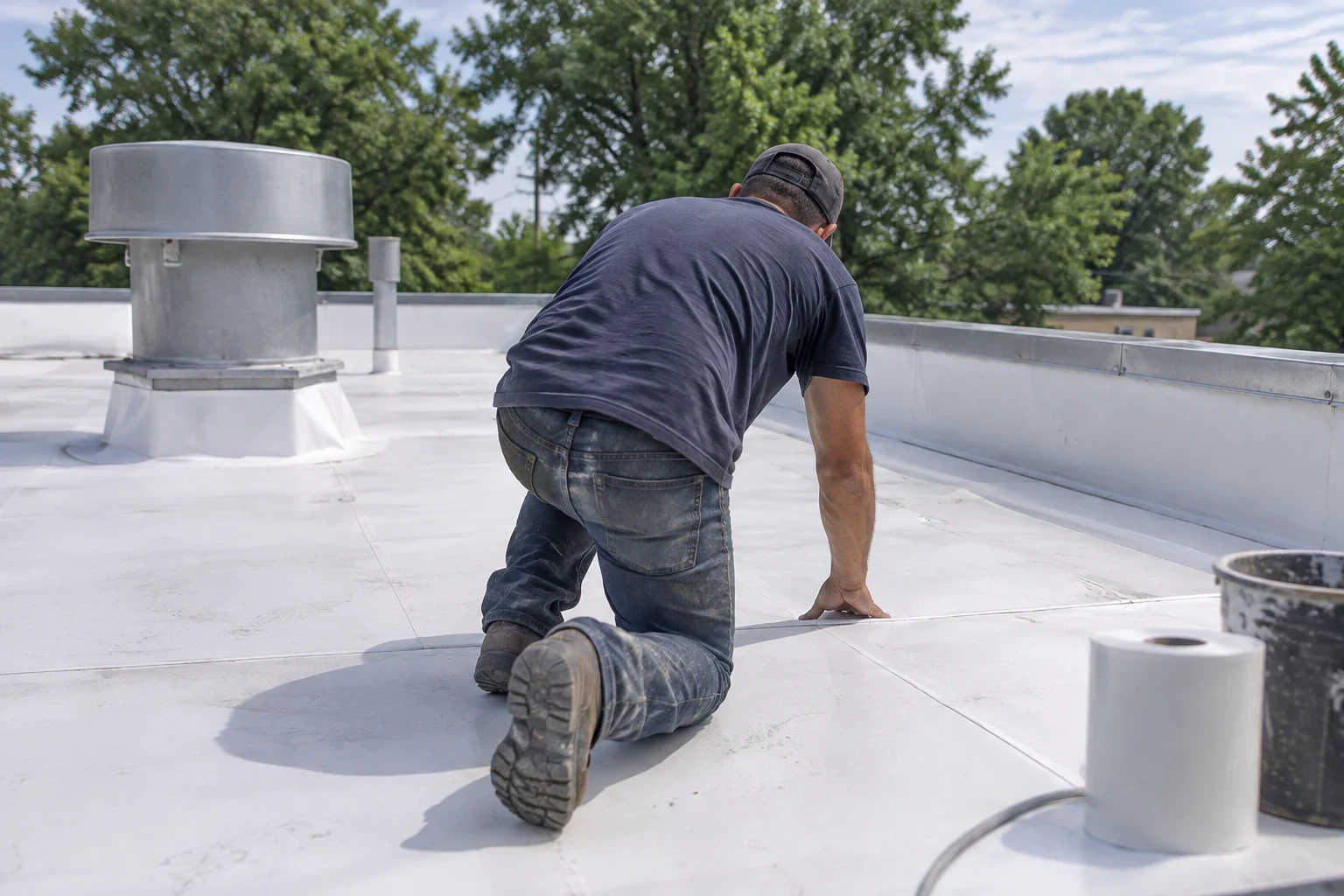
- Water that won't leave
- Puddles still sitting two days after rain mean the roof isn't draining. Standing water wears down any roof faster and finds the weak spots.
- Blisters and cracks
- Older rolled roofing and tar roofs bubble and split as they age. Each crack is a path for water.
- Stains below the flat section
- Brown rings on the garage or sunroom ceiling, or peeling paint near the wall line, usually trace back to the roof above.
- A spongy feel
- A section that sinks a little under your weight usually has wet wood below it. Found early, the fix stays small.
- Ice damage after winter
- Our freeze-and-thaw cycles open small gaps at seams and flashing. A check each spring catches them before summer storms do.
How the work goes
- 1
Free inspection
We look at the membrane, seams, flashing and drainage, and check inside for stains. We take pictures as we go and walk you through each one.
- 2
Line-item price and a straight answer
The estimate lists each part of the job on its own line. We tell you honestly whether a repair will do or the section needs a new roof, and we lay out the drainage plan if water has been ponding.
- 3
Install day
Most residential flat sections are done in a day or two. We cover plants and keep the driveway clear where we can.
- 4
Final walk and upkeep tips
We walk the finished roof with you, point out the seams and flashing to watch, and explain what a simple twice-a-year check looks like.
What moves the cost of a TPO roof
Every flat section is different, so we price after we see it. The estimate breaks out each part of the job. We also offer financing if you would rather spread the cost out.
- Size and shape
- Square footage matters, but so do corners, walls and odd angles. More detail work means more labor.
- What's underneath
- Multiple old layers take longer to tear off. Wet insulation or rotted decking has to be replaced, and we won't know the full picture until it's opened.
- Drainage fixes
- A roof that ponds may need tapered insulation or a new scupper. That adds material but solves the root problem.
- Membrane thickness
- TPO comes in different thicknesses. Thicker sheet costs more and holds up better to foot traffic and hail.
- Penetrations and access
- Each vent, skylight or pipe needs its own flashing. Tight access or a second-story roof also adds time.
TPO roofing questions
- Can TPO go on the sloped part of my roof?
- It can, but it rarely makes sense on a home. TPO is made for flat and low-slope sections. The steeper parts usually stay in shingles or metal, and we tie the two together with proper flashing where they meet.
- How long does a TPO roof last?
- With good seams and flashing, TPO often lasts 20 years or more. Upkeep makes the difference. Keeping the drains and edges clear and fixing small issues early adds years.
- Will a white roof make my home colder in winter?
- Not in any way you'd notice. Snow covers it much of the winter anyway. The insulation under the membrane does far more for winter comfort, and the white surface helps keep rooms below cooler in summer.
- Can you put TPO over my old flat roof?
- Sometimes, if there is only one layer and the insulation underneath is dry. Most of the time we recommend tearing off. It's the only way to find wet wood before it gets covered up.
- Can I walk on it?
- Yes, for checking drains or clearing leaves. Wear soft-soled shoes and avoid dragging anything sharp across it. If you'll be on it often, we can add walkway pads.
- What upkeep does a TPO roof need?
- Clear leaves and twigs from the surface and drains, especially in fall. Look at the seams and wall flashing each spring and fall. If anything looks lifted or cracked, a quick repair now keeps the rest of the roof sound.
Let's look at your flat roof
We'll check the membrane, seams and drainage and tell you straight whether it needs a repair or a new TPO roof. The inspection costs you nothing.